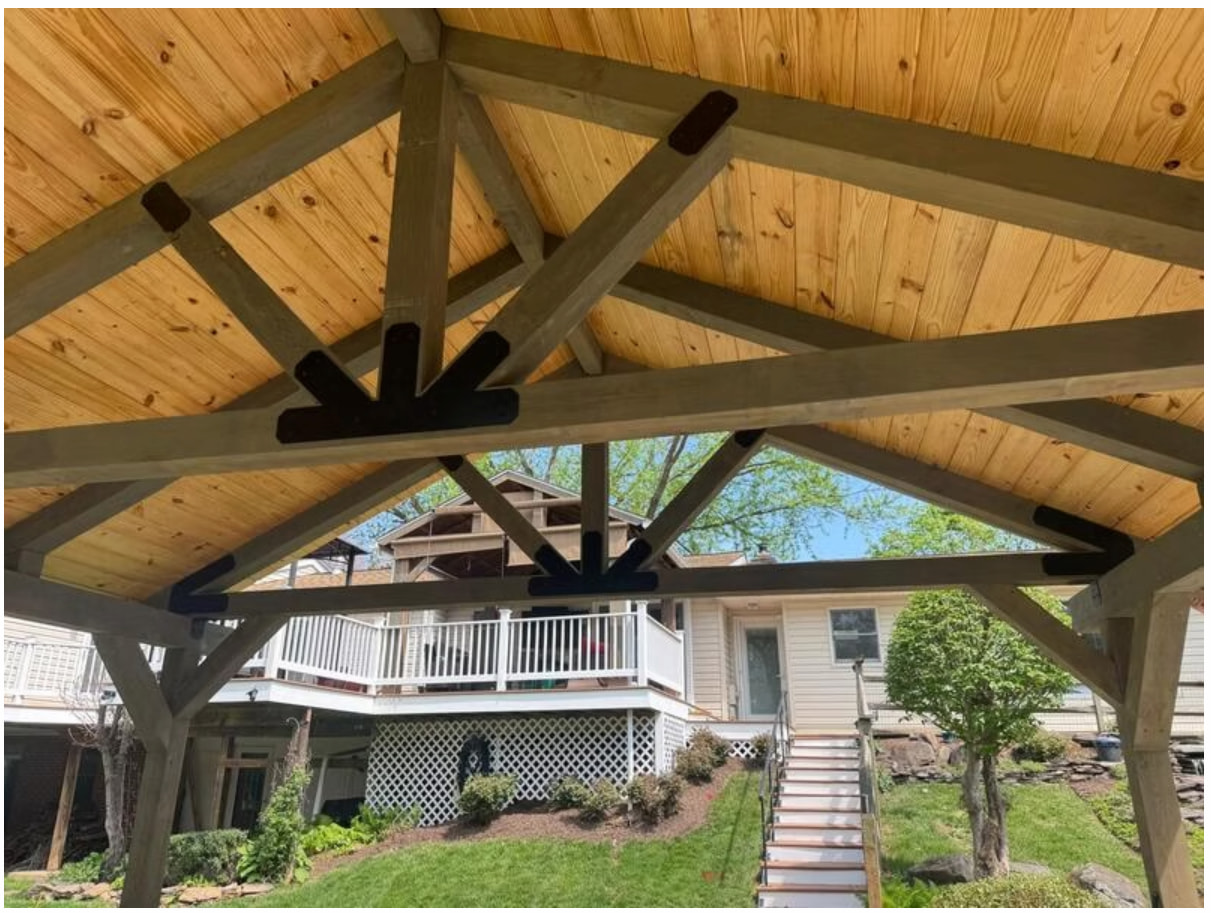
When you start shopping for a timber pavilion, the wood species question hits you fast. Cedar? Cypress? Pressure treated pine? They all look similar in a brochure photo, but they perform very differently over the next 20 years sitting in your backyard.
We’ve built pavilions in all three species for customers across the country. Here’s what we tell people when they ask which one is right for them — straight, no marketing fluff.
The Short Version
If you live in a humid climate, Cypress is built for it. If you want classic curb appeal that ages beautifully, Cedar is the look. If you want a solid, long-lasting structure for the best price, Pine is the workhorse.
Now the details.
Pressure Treated Pine — The Best Value
Pine is the most affordable wood species and the most commonly chosen across our pipeline. About 70% of our customers go this route. It gets pressure treated for outdoor durability, which means chemicals are forced into the wood under pressure to protect against rot, insects, and decay.
What it looks like: A warm yellow-brown when new. Pine accepts stain extremely well, so you can match almost any color you want. Many of our customers go with a darker stain to give it a richer look. Without stain, Pine will weather to a silver-gray over time.
Where it shines: Pine is the right choice when budget matters most or when you plan to stain the wood anyway. The treatment makes it last decades outdoors. Pair it with a quality stain and most people can’t tell the difference between Pine and Cedar from across the yard.
The honest tradeoffs: Pine is heavier than Cedar. The treatment process gives it a slight greenish tint when fresh — that fades quickly but it’s worth knowing. It’s also a softer wood, so it dings easier than Cedar or Cypress.
Real pricing: A 20×20 Pine pavilion runs $17,700. The same size in Cedar is $23,500. That’s about $5,800 you keep in your pocket.
Eastern Red Cedar — The Classic Premium Choice
Cedar is the iconic American timber species. It’s what people picture when they think of a beautiful timber pavilion. Naturally rot-resistant and aromatic, it’s been used for outdoor structures for centuries because it just lasts.
What it looks like: Rich reddish-brown with darker streaks. The grain has more character than Pine. Cedar weathers to a silver-gray over years if left untreated, which many homeowners actually prefer for the rustic look. Stained, it deepens into beautiful warm tones.
Where it shines: Cedar is the right choice when the pavilion is a statement piece. If you want it to be the visual anchor of your backyard or a venue, Cedar delivers. The natural oils in the wood resist insects and decay without needing pressure treatment chemicals. It’s also lighter than Pine, which makes assembly slightly easier.
The honest tradeoffs: Cedar typically runs 33% more than Pine for the same pavilion. It’s softer than Cypress so it can show wear in high-traffic areas. The reddish color isn’t for everyone — some buyers prefer the more neutral tone of Cypress.
Real pricing: A 20×20 Cedar pavilion runs $23,500. A 30×40 Cedar runs $72,100.
Rough Cut Cypress — Best for Humid Climates
Cypress is the wood we recommend most often to customers in the Southeast — Florida, Louisiana, Mississippi, coastal Carolinas. There’s a reason cypress was used to build everything from boats to historic homes throughout the Gulf states. It thrives in humidity and resists everything that damages other wood species.
What it looks like: Warm honey-brown with a subtle grain. More understated than Cedar but more refined than Pine. Cypress finishes beautifully — it accepts stain like Pine but keeps the natural appearance Cedar lovers want. It weathers to a silvery patina over time.
Where it shines: If your pavilion will sit in a hot, humid environment with lots of rain, Cypress is the right answer. The wood contains natural compounds that resist decay, mold, and insects in conditions where other species struggle. It also has the warm appearance customers want without the strong red tones of Cedar.
The honest tradeoffs: Cypress is harder to source than Pine or Cedar, so prices can vary. It’s typically priced between Pine and Cedar — about 25% more than Pine. The “rough cut” finish has more visible grain texture than the smoother surfaces you might expect, which most buyers actually love but worth knowing.
Real pricing: A 20×20 Cypress pavilion runs about 25% more than the same size in Pine.
Side-By-Side: Quick Comparison
For lowest price: Pine wins by a long shot. About $5,000-$7,000 less than Cedar for mid-size pavilions.
For looks: Cedar has the most visual character. Cypress is the elegant middle ground. Pine looks great when stained but more neutral when raw.
For humid climates: Cypress is built for it. Cedar handles humidity well too. Pine survives but the treatment chemicals are doing more work.
For dry climates: Any of the three perform well. Pine becomes a no-brainer here because the durability gap closes.
For low maintenance: Cedar and Cypress age beautifully without any care if you’re okay with a silver-gray patina. Pine will weather similarly but performs better with periodic re-staining.
For weight and assembly: Cedar is the lightest. Cypress and Pine are similar in weight. Lighter wood means easier handling during your weekend build.
What Most Customers Actually Choose
From our quote data:
About 70% of customers choose Pressure Treated Pine. It’s the practical choice for the budget-conscious buyer who plans to stain anyway.
About 18% choose Eastern Red Cedar. These are the customers who want the premium look and have the budget to match.
About 8% choose Rough Cut Cypress. Almost all of these buyers are in humid climates or are specifically drawn to the Cypress look.
The remaining 4% get into custom mixed-species builds or aren’t sure when they request a quote.
What We Recommend
If your budget is under $20,000, go with Pine and a quality stain. You’ll get a pavilion that looks beautiful and lasts decades.
If you live in Florida, Louisiana, coastal Mississippi, or anywhere with brutal humidity, choose Cypress. The natural decay resistance is worth the upgrade.
If your pavilion is going to be a wedding venue, a high-end backyard centerpiece, or anywhere the look matters more than the budget, go with Cedar. It’s the wood that turns heads.
If you can’t decide, get a quote in two species and see how the numbers compare for your specific size. We’ll send you both prices side by side so you can make the call with real numbers, not estimates.
Get Your Price
Two ways to find out exactly what your pavilion will cost in any species:
Talk to our AI advisor — get a ballpark price in about 2 minutes, no forms, no waiting. Get an Instant Price →
Submit a quote request — tell us your specs and an advisor will call you within one business day with pricing in your wood of choice. Request a Free Quote →
Or call us directly at 731-595-0700. We’re in Henderson, Tennessee, and we ship nationwide.
Every Woodland pavilion kit includes pre-assembled trusses, full hardware, tongue-and-groove decking, roofing, and detailed plans. Prices shown are kit prices only as of 2026. Tennessee taxes are included. Shipping, site prep, and installation are separate.